Woman Writters

Cláudia de Campos

Maria Cláudia de Campos (1859–1916) was a Portuguese writer, feminist, and pacifist, best known for her controversial 1899 novel Elle. Born in Sines to a well-educated family, she was fluent in several languages and studied English and German literature, even writing a manuscript on Percy Shelley. At sixteen, she married Joaquim d’Ornelas e Matos and […]

Cláudia de Campos Read More »

Virginia Vitorino

Virgínia Vitorino (1895–1967) was a Portuguese poet, playwright, teacher, and radio pioneer from Alcobaça. She studied Romance languages at the University of Lisbon and music and singing at the Conservatório Nacional, where she later taught Portuguese, French, and Italian for about forty years. An early collaborator with Portugal’s public broadcaster Emissora Nacional, she directed radio

Virginia Vitorino Read More »

Cora Sandel

Cora Sandel, the pseudonym of Sara Fabricius, is one of Norway’s most significant 20th century authors. She was born in Kristiania (now Oslo) in 1880 and moved with her family to Tromso, Northern Norway, in 1893. As a young woman, she aspired to become a painter and traveled to Paris in 1906 to pursue her

Cora Sandel Read More »

Marcelle Tinayre

Marcelle Tinayre (1870–1948) was a distinguished French author celebrated for her exploration of feminist themes and romantic narratives. Born Marcelle Marguerite Suzanne Chasteau on October 8, 1870, in Tulle, Corrèze, France, she was the eldest daughter of Émile Chasteau, an artist, and Louise Saigne, an educator. Her mother and grandmother, both writers, nurtured her early

Marcelle Tinayre Read More »

Adèle Weman

Adèle Weman (1844–1936) was a Finnish-Swedish teacher, writer, playwright, and poet who used mainly the pen name Parus Ater (also Inge Storm and Zakarias). She lived most of her life in Kimito, Kimitoön, and she did pioneering work in education, culture, and youth association activities. In the 1860s, she founded a Swedish-language school for rural children in

Adèle Weman Read More »

Natalia Ginzburg

Natalia Levi was born in Palermo on 14 July 1916 into a Jewish family. Her father, Giuseppe Levi, was a scientist from Trieste and a staunch anti-fascist, which led to his imprisonment along with Natalia’s brothers. The family moved to Turin when Natalia was still a child. At school, she was marginalized for being Jewish

Natalia Ginzburg Read More »

Minna Canth

Minna Canth (1844-1897, née Johnson) was a notable Finnish realist and naturalist writer of the 1880s and 1890s. She is also one of the first authors writing in Finnish, while in the literature of Finland the language before her days was mainly Swedish. Canth had many roles in the literary field of her own time.  She

Minna Canth Read More »

Alma Maksimiljana Karlin

Alma Maksimiljana Karlin was born in Celje to Slovenian parents and at the age of eleven she discovered her talent for foreign languages. In the autumn of 1908, she moved to London, where she got a job in a translation office, and while working, she familiarised herself with Asian cultures and studied foreign languages. As

Alma Maksimiljana Karlin Read More »

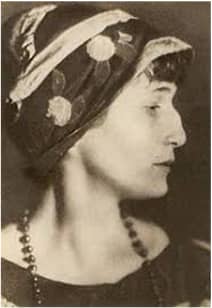
Anna Akhmatova

Anna Akhmatova (23 June 1889 – 5 March 1966) was a distinguished and influential poet, translator and literary critic shortlisted for the Nobel Prize in 1965 and 1966 (after long being in official disfavour). Akhmatova was born at Bolshoy Fontan, near the Black Sea port of Odessa. Her father, Andrey Gorenko, a naval engineer, and

Anna Akhmatova Read More »

Zofka Kveder

Zofka Kveder was born in 1878 in Ljubljana; soon after her birth, however, her family moved to the countryside. After two years of primary school in her home village, her father sent her to Ljubljana, where she attended a convent school. Back in her home village, she suffered at the hands of her father’s alcoholism

Zofka Kveder Read More »

Scroll to Top